Bergmann's and Allen's rule.
http://en.wikipedia.org/wiki/Bergmann’s_rule
Bergmann's rule is an ecogeographic rule that correlates latitude with body mass in animals.[1] Broadly it asserts that within a species the body mass increases with latitude and colder climate, or that within closely related species that differ only in relation to size that one would expect the larger species to be found at the higher latitude. The rule is named after a nineteenth-century German biologist, Christian Bergmann, who first formulated the rule in 1847. The rule is often applied only to mammals and birds (endotherms), but some researchers have also found evidence for the rule in studies of ectothermic species.[2] Bergmann's rule is controversial amongst researchers and its validity has often been called into question,[3] and there is division amongst scientists about whether the rule should be interpreted to within species variation or among species variation.[1] Although several mechanisms have been suggested to explain the rule there is no clear explanation for why the pattern exists.
http://en.wikipedia.org/wiki/Allens_rule
Allen's rule is a biological rule posited by Joel Asaph Allen in 1877. It states that endotherms from colder climates usually have shorter limbs (or appendages) than the equivalent animals from warmer climates.
In cold climates, the greater the exposed surface area, the greater the loss of heat and therefore energy. Animals (and humans) in cold climates need to conserve as much energy as possible. A low surface area to volume ratio helps to conserve heat.
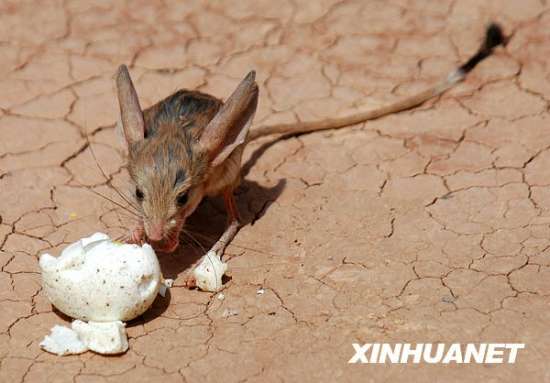
In warm climates, the opposite is true. An animal will overheat quickly if it has a low surface area to volume ratio. Therefore, animals in warm climates will have high surface area to volume ratios so as to help them lose heat.
In a nutshell, it simply means there is a ratio between body surface to body mass. For example, Fur or Tutsi people of Africa release body heat more readily because their ratio is high. However, Eskimos and Inuit have a lower ratio and therefore retain body heat.

No comments:
Post a Comment